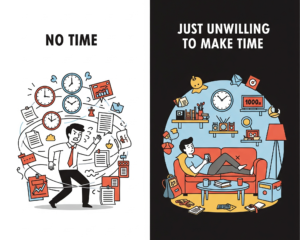
No Time or Just Unwilling to Make Time?
written by: Zahriyatun Nafiah
In today’s fast paced world, many people especially the younger generation often complain about not having enough time. With busy schedules filled with classes, assignments, part-time jobs, organizations, and endless digital distractions, it’s easy to feel overwhelmed. But the real question is: do they truly lack time, or are they simply unwilling to make time? The truth is, everyone gets the same 24 hours a day. The issue lies not in the amount of time we have, but in how willing we are to prioritize and manage it wisely.
The “busy” culture has become increasingly common. Many appear to be constantly active, but when observed closely, much of their time is spent on unproductive activities like endlessly scrolling through social media, binge-watching shows, or procrastinating. Sadly, essential responsibilities—such as studying, praying, helping family, or completing important tasks are often postponed or ignored. This habit doesn’t only harm personal growth, but also nurtures a mindset that being “busy” is an acceptable excuse to neglect responsibilities.
This attitude is rooted in a lack of time management awareness and a weak sense of commitment. Young people often want to be involved in everything, yet struggle to remain consistent in fulfilling what truly matters. Being committed is not about how many activities you take on, but how well you carry out the responsibilities you’ve chosen. Making time is not about waiting for free time to magically appear it’s about creating it by being intentional. We must learn to distinguish between being “busy” and being truly “productive,” and realize that time is limited and must be managed, not wasted.
As a solution, we can begin with simple but essential steps: set clear priorities. Not everything has to be done at once. Use a to-do list or digital planner to organize daily tasks, ensuring that important duties are not constantly delayed. Learn to say “no” to unnecessary distractions and protect your focus. Reflecting daily on how you’ve used your time can also help you improve over time. Most importantly, understand that time is a responsibility. If we don’t learn to manage it wisely now, we’ll continue to be trapped in the illusion of busyness and miss out on the meaning and value of the responsibilities we were meant to fulfill.